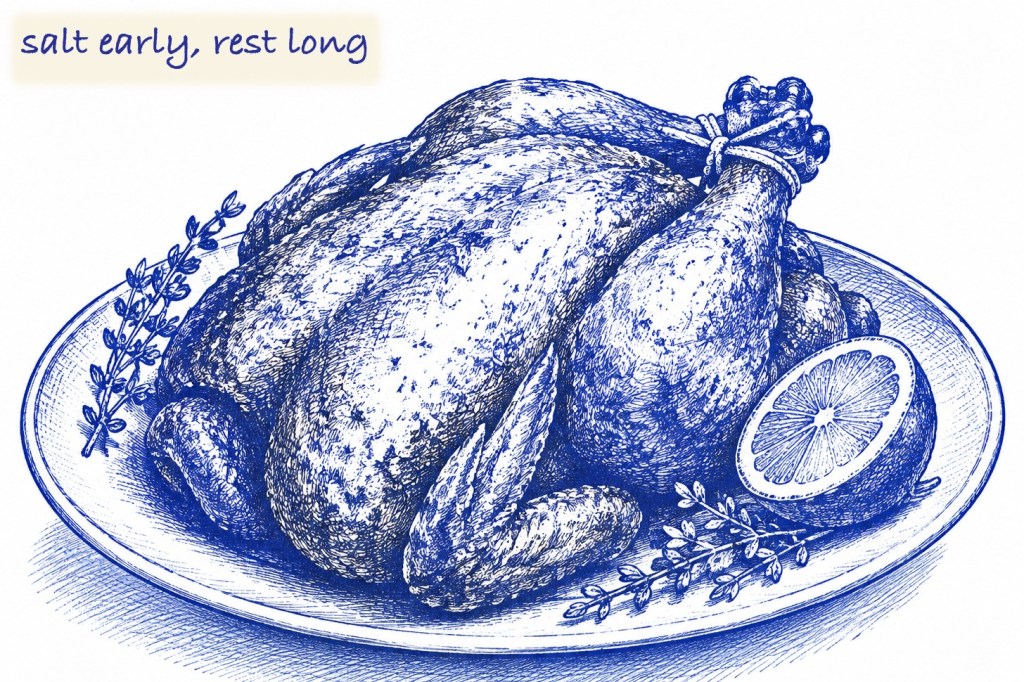
A roast chicken is the simplest dinner in the French repertoire and one of the easiest to get wrong. The good version has skin that crackles, meat that stays juicy to the bone, and a spoonful of pan juices that tastes like the whole bird. It takes no special equipment and very little work. It takes planning, because most of the flavor is decided the night before you light the oven.
What you need
- One whole chicken, about 3½ to 4 pounds (1.6 to 1.8 kg), the best you can find
- Kosher salt: about 1 teaspoon per pound of chicken (use a little less if your salt is fine and dense)
- Black pepper, freshly ground
- 2 tablespoons soft butter or a spoonful of oil
- Aromatics (optional): a few thyme sprigs, half a head of garlic, a halved lemon
- For the pan juices: ½ cup dry white wine, 1 cup chicken stock, 1 tablespoon cold butter
- Kitchen string: plain cotton butcher’s twine, such as Regency Wraps cooking twine
- An instant-read thermometer: the only reliable way to know the chicken is done. The Lavatools Javelin is a foldable, NSF-certified model, and the Alpha Grillers thermometer is a low-cost alternative that thousands of cooks have reviewed.
As an Amazon Associate, I earn from qualifying purchases.
The night before: dry and salt
This is the step that matters most. Pat the chicken completely dry, inside and out. Moisture is the enemy of crisp skin. Sprinkle the salt over the whole bird, a little inside the cavity too, then set it on a plate or rack, uncovered, in the refrigerator for at least a few hours and ideally overnight. The salt seasons the meat deeply, and the cold, dry air of the refrigerator dries the skin so it browns and crisps in the oven.
Which salt you use is a real choice. I wrote about the difference in when and how to salt and in French sea salt. For this recipe, plain kosher salt is the right tool.
Option: a citrus-herb garlic marinade
If you prefer a marinade to a dry brine, this one suits a 4 to 5 pound chicken and gives the bird a bright, herby, garlicky flavor.
- ¼ cup olive oil
- Juice and zest of 1 lemon (and 1 orange, if you have it)
- 4 to 6 garlic cloves, minced
- 2 tablespoons fresh rosemary, chopped (or 2 teaspoons dried)
- 1 tablespoon fresh thyme leaves (or 1 teaspoon dried)
- 1 tablespoon Dijon mustard
- 1 tablespoon honey or maple syrup
- 2 teaspoons kosher salt
- 1 teaspoon black pepper
- 1 teaspoon smoked paprika
- Pat the chicken dry, then loosen the skin over the breasts and thighs with your fingers.
- Whisk all the marinade ingredients together. Rub about a third of it under the skin, directly on the meat.
- Place the chicken in a large zip-top bag or dish, pour the remaining marinade over it, and turn to coat.
- Refrigerate for 12 to 24 hours, turning occasionally.
Then roast it as described below. A few notes from the kitchen:
- Skip the dry-salt step. The marinade already carries the salt, so do not salt the bird again before roasting. Taste at the table and add a pinch if it needs it.
- Wipe off the loose bits. Lift the chicken out, let the excess drip off, and wipe away stray garlic and herbs, which burn at 425°F. Pat the skin as dry as you can.
- Watch the honey. It browns quickly. If the skin darkens too fast, lay a loose piece of foil over the breast.
- Expect slightly less crisp skin. A wet marinade works against it. For crisper skin, take the chicken out of the bag about an hour before roasting and leave it uncovered in the refrigerator.
- Add time for a bigger bird. A 5-pound chicken needs roughly 15 minutes more than the times below. Trust the thermometer: 165°F in the thickest part of the thigh.
- Throw away what is left in the bag. The marinade touched raw chicken, so do not use it as a sauce.
Roasting
- Take the chicken out of the refrigerator about 30 minutes before roasting. Heat the oven to 425°F (220°C) with a rack in the lower third.
- Pepper the bird and tuck the thyme, garlic and lemon into the cavity if you are using them. Tie the legs together with string and tuck the wing tips under. Trussing keeps the shape even so the breast does not dry out before the thighs cook.
- Rub the skin with the soft butter or oil. Set the chicken breast side up in a roasting pan, a heavy skillet or an ovenproof sauté pan. Use something with sides just a little larger than the bird, so the juices do not scorch.
- Roast for roughly an hour to an hour and 15 minutes for a bird this size. Start checking at 50 minutes. The oven and the bird decide the time, and the thermometer decides when it is done.
- The chicken is cooked when the thickest part of the thigh reaches 165°F (74°C), the safe temperature the USDA sets for all poultry. Check the innermost part of the thigh and the thickest part of the breast, without touching the bone.
- Move it to a board or platter and let it rest, uncovered or loosely tented, for 15 to 20 minutes.
Do not baste. Opening the door lets the heat out, and wet skin does not crisp. If the skin is browning too fast, lay a loose piece of foil over the breast.
The pan juices
While the chicken rests, tilt the roasting pan and spoon off most of the clear fat, keeping the dark juices and browned bits. Set the pan over medium heat, add the white wine and scrape the bottom with a wooden spoon. Let it reduce by about half, add the stock and simmer a few minutes until it tastes concentrated. Take it off the heat, swirl in the cold butter, and strain. Add any juices that collect on the board under the chicken.
Carving
A sharp knife makes this clean work. Cut the string and remove the legs at the joint. Separate the thigh from the drumstick. Slice along either side of the breastbone and lift each breast off whole, then slice it across the grain. Serve with the pan juices spooned over. The knife I would choose is in my guide to chef’s knives, and keeping it sharp is covered in how to care for your knives.
What can go wrong
- Soggy skin: the bird went in damp, the pan was too crowded, or you basted. Dry it longer next time and leave it alone in the oven.
- Dry breast: it was overcooked. Pull the chicken at 165°F in the thigh and do not skip the rest.
- Pale skin: the oven was not hot enough, or the bird was too cold. Check the oven temperature and let the chicken sit out 30 minutes first.
- Smoke in the oven: fat spattering on a very hot pan. A pan with sides, and a little water or stock in the bottom, helps.
A pan for roasting
A heavy pan with an ovenproof metal handle does the job. A seasoned carbon steel skillet works well if you have one. I wrote about how to care for one in How to Season and Care for a Carbon Steel Pan. Do not use a pan with a plastic or coated handle, and check the maker’s oven limit first.
FAQ
Do I need to truss the chicken?
It helps. A tied bird cooks more evenly and keeps a tidy shape. If you do not have string, at least tuck the wing tips under and cross the legs.
Should I wash the chicken?
No. The USDA advises against washing raw poultry because it spreads bacteria around the kitchen. Pat it dry with paper towels, and wash your hands and surfaces afterward.
Can I roast it right after salting?
Yes, but the result is better with time. If you only have an hour, salt it and leave it uncovered in the refrigerator, and accept a little less crisp skin.
How long do leftovers keep?
Refrigerate the chicken within two hours of cooking. It keeps for three to four days in the refrigerator, according to the USDA. Reheat it to 165°F.
Can I use a different temperature?
Many cooks roast at 450°F for a crisper skin and a shorter time. At any temperature, the thermometer reading, not the clock, tells you when it is done.

Leave a Reply