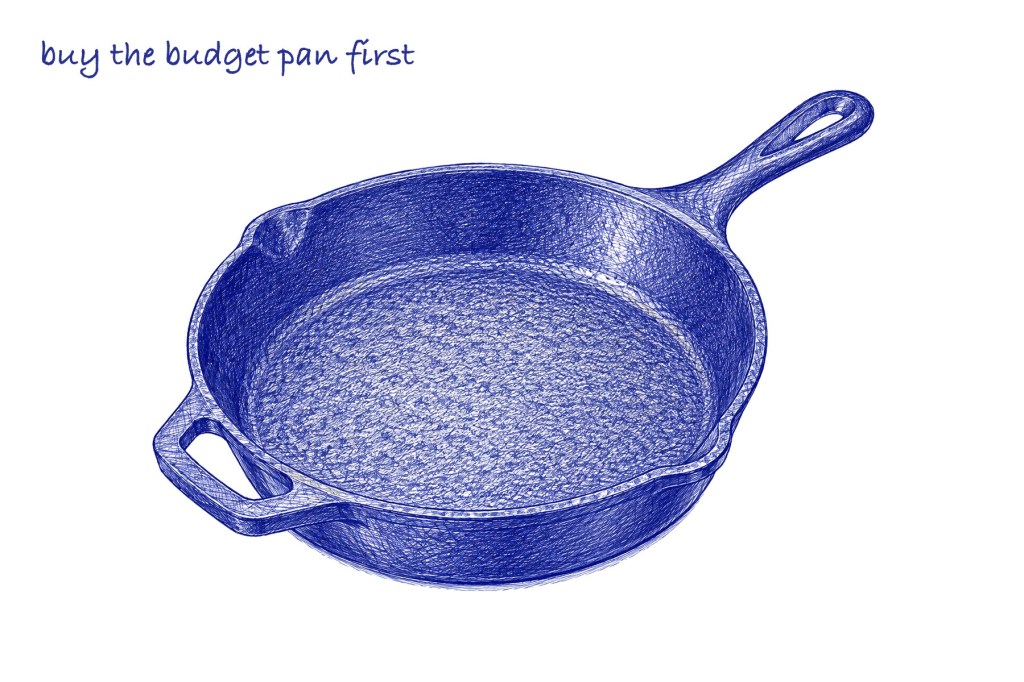
Cast iron is the cheapest serious pan you can buy, and also the one people most often buy wrong. After 40 years in professional kitchens, my advice is simple: you do not need the most expensive skillet. You need the right size, a weight you can lift, and a surface you are willing to look after. Here is how to choose. I have not lab-tested any pans for this article, so I describe categories and what sellers and reviewers say, not rankings.
Start with the size
A 10-inch skillet suits one or two people, while a 12-inch is the everyday size for a family. Size is measured across the top rim, so the flat cooking floor is smaller. Lodge, for example, lists its 12-inch skillet with a base of about 10 inches. Lodge’s 12-inch pan weighs roughly 8 pounds, according to retailer listings, and that is before any food goes in. If you cook for two, the 10-inch is easier to live with. If you roast chicken thighs or bake cornbread for a crowd, buy the 12.
Weight matters more than you think
A heavy pan holds heat well, which is why cast iron sears so nicely. But a pan you dread lifting ends up in the cupboard. Some makers sell lighter, thinner-walled pans. Field Company, for instance, is described by reviewers as lighter than a Lodge of the same size, about 4.5 pounds against 5.35 pounds for a 10.25-inch pan. Try lifting one with a full load of food in your mind: a loaded 12-inch pan can be a lot to carry from stove to oven.
Rough or smooth surface
This is the real dividing line between budget and premium pans. Modern budget skillets come out of the sand mold with a slightly pebbled, rough surface. Premium makers, and many old foundries, machine or polish the cooking surface until it is smooth. Does it matter? A smooth surface releases eggs more easily at first and feels nicer under a spatula. A rough one still works well, and it improves as the seasoning builds with use. Reviewers who compared the two generally found both well made. If eggs are your main use, smooth has an edge. If you sear steaks and bake, rough is perfectly fine.
The three routes to a skillet
- Budget and pre-seasoned: The classic example is a Lodge 10.25-inch skillet, which ships pre-seasoned with vegetable oil and is made in the USA, according to several retailers. It is inexpensive, tough and easy to find. Expect a rougher surface.
- Premium and machined: Smithey and Field Company are two names that reviewers often mention for smooth, polished surfaces. They cost several times more, and the gain is mostly in feel and egg release, not in searing power.
- Vintage: Old pans from flea markets and estate sales are often thinner, lighter and smoother. Look at the surface, check that the pan sits flat, and look underneath for cracks. Avoid any pan that rocks on a flat surface or has a crack.
What I would look for in the store
- A pan that sits flat on a counter and does not rock.
- A handle you can grip with an oven mitt on, plus a helper handle on the larger sizes.
- Pour spouts if you pour off fat often. They are handy but not essential.
- Even walls with no deep pits or cracks.
- A size you will use weekly, not once a year.
What cast iron does well, and what it does not
Cast iron is excellent for searing steak and pork chops, frying chicken, baking cornbread, roasting vegetables, and anything that goes from stove to oven. It is a poor choice for long simmers of acidic sauces such as tomato, which can strip seasoning and pick up a metallic taste, and it is slow to respond when you change the heat. If you want a lighter, more responsive pan, carbon steel is the professional kitchen’s alternative, and it is seasoned and cared for in much the same way.
Common buying mistakes
- Buying a set: A 6-inch, 10-inch and 12-inch bundle sounds like a deal, but most cooks use one size for nearly everything.
- Paying for a name: A higher price buys a smoother finish and often a lighter pan. It does not buy better searing. Ask yourself whether you will notice the difference before you pay it.
- Ignoring your stove: A heavy pan on a glass-top range needs care, because dragging it can scratch the surface. Lift it, do not slide it.
- Skipping the lid: A fitted lid turns a skillet into a shallow Dutch oven for braising chicken. It is worth having if you cook that way, but it is a separate purchase on many pans.
- Expecting nonstick on day one: Seasoning builds with use. The first month is the learning period, so start with bacon, sausages or fried chicken, not delicate fish.
Seasoning and care in short
Even a pre-seasoned pan benefits from a few rounds of cooking with fat before you trust it with eggs. After use, wipe or rinse it, dry it right away on the burner, and rub on a very thin coat of oil. A little soap will not ruin a well-seasoned pan, but a long soak will cause rust. If rust does appear, scrub it off, dry the pan, and re-oil it.
My advice
If you are buying your first skillet, get a 10- or 12-inch pre-seasoned budget pan, and cook in it for a year. You will learn how you actually use it. If you then find that you love it and want a smoother, lighter pan, you will know exactly what to pay extra for. If you never use it, you lost very little. Buy the premium pan second, never first.
If you want a specific pan to start with, the one I would point you to is the Lodge 10.25-inch pre-seasoned skillet. It is pre-seasoned and made in the USA, and when I checked it was about $25 on Amazon. Prices change, so look before you buy.
This post contains Amazon affiliate links. As an Amazon Associate, I earn from qualifying purchases, at no extra cost to you.

Leave a Reply