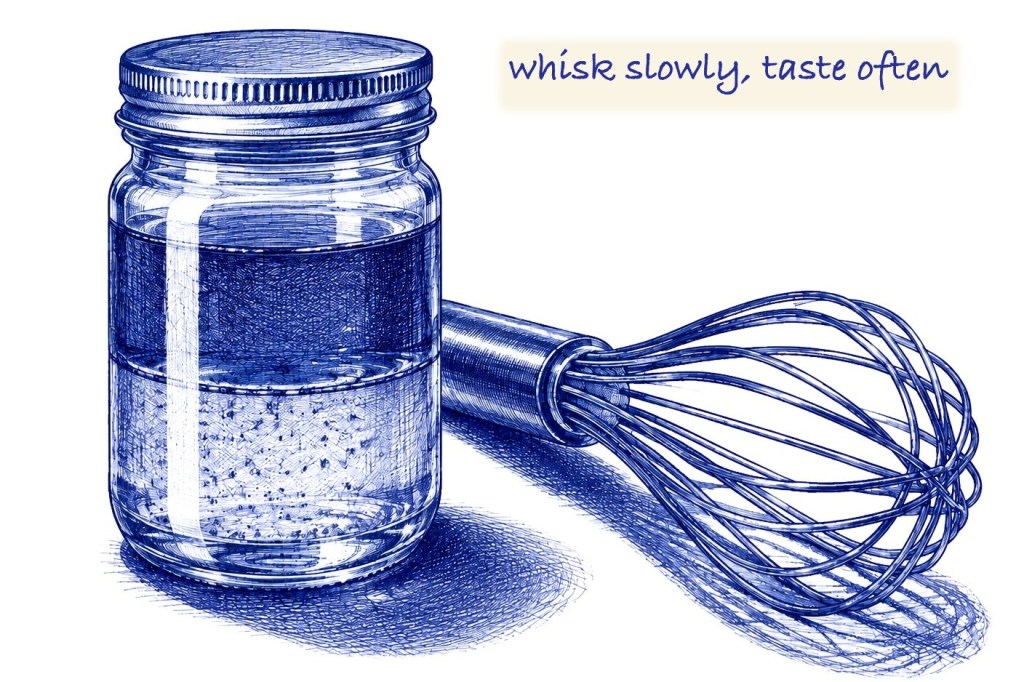
If you can make a good vinaigrette, you will never buy a bottled dressing again. In a professional kitchen it is one of the first things a young cook learns, because it teaches balance: fat against acid, salt against sweetness, and how to taste as you go. I have been cooking for 40 years, and the vinaigrette I make today follows the same simple ratio I learned at the start. Once you know it, you stop needing a recipe.
The ratio: three parts oil, one part acid
The classic French ratio is three parts oil to one part vinegar. That is the whole idea. A tablespoon of vinegar takes three tablespoons of oil. A quarter cup of vinegar takes three quarters of a cup. Add salt, pepper and a spoonful of mustard, and you have a dressing that works on almost any green salad.
Treat 3:1 as a starting point, not a law. Sharp vinegars and lemon juice can take a little more oil, and mild, sweet vinegars can take a little less. Taste it on a lettuce leaf rather than from the spoon, because a dressing always tastes sharper on its own than it does on greens.
The basic mustard vinaigrette
This makes about four tablespoons, enough to dress a large salad for four people.
- 1 tablespoon red wine vinegar, white wine vinegar or sherry vinegar
- 1 teaspoon Dijon mustard
- A good pinch of fine salt
- 3 tablespoons olive oil or a neutral oil
- Freshly ground black pepper
- Put the vinegar, mustard and salt in a small bowl and stir until the salt has dissolved.
- Pour in the oil in a thin stream, whisking all the time, until the dressing looks thick and glossy.
- Add pepper, then taste it on a leaf of lettuce. Add a little more vinegar if it is flat, or a little more oil if it bites.
You can also make it in a jar. Put everything in, close the lid and shake hard for ten seconds. It is not as stable as the whisked version, but it is just as good for a salad that goes straight to the table.
Why the mustard matters
Oil and vinegar do not want to stay together. Left alone, they separate within a minute. Mustard helps hold them in a loose emulsion, which is why a vinaigrette with mustard looks creamy and clings to the leaves, while one without it runs off and pools at the bottom of the bowl. A small spoonful of honey does a similar job and softens the acid at the same time.
Whisking matters too. Adding the oil slowly breaks it into very small droplets that stay suspended longer. If you pour it all in at once, the dressing will look thin and split.
Salt goes in the vinegar, not the oil
This is a small habit that makes a visible difference. Salt dissolves in vinegar and in water, but not in oil. If you salt the finished dressing, you often get gritty crystals and an uneven taste. Dissolve the salt in the vinegar first, and the whole dressing seasons evenly. If you want to read more about the salts themselves, I wrote about French sea salt, from Guérande to the Camargue.
Variations worth knowing
- Shallot vinaigrette: add one tablespoon of very finely minced shallot and let it sit in the vinegar for ten minutes before you add the oil. The vinegar softens the raw bite.
- Lemon vinaigrette: use lemon juice in place of vinegar. It is lighter and works well on fish, asparagus and tender leaves.
- Herb vinaigrette: stir in chopped chives, tarragon or parsley just before serving, so they stay green.
- Honey and mustard: add a teaspoon of honey and a little extra mustard for a rounder, slightly sweet dressing that suits bitter greens such as endive or radicchio.
- Walnut or hazelnut oil: replace a third of the oil with a nut oil for a deeper flavor. Use it fresh, because nut oils turn bitter when they get old.
How to dress a salad
Most home cooks use too much dressing. In a professional kitchen the goal is a leaf that shines, not a salad sitting in a pool. Put the washed, dry greens in a large bowl, add about half the dressing, and toss gently with your hands, lifting the leaves rather than stirring them. Taste a leaf. Add more only if it needs it.
Two more rules. Dry your greens well, because water on the leaves keeps the dressing from clinging. And dress the salad just before you serve it. Vinegar softens tender leaves quickly, and a salad dressed ten minutes early arrives limp.
Making it ahead and storing it
A plain vinaigrette of oil, vinegar, mustard and salt keeps for about a week in a jar in the refrigerator. If you add fresh shallot, garlic or herbs, use it within a few days and keep it cold. Olive oil turns cloudy and thick in the refrigerator, which is normal. Take the jar out fifteen minutes before you need it and shake it until it loosens again.
The short version
- Use three parts oil to one part acid, then adjust to taste.
- Dissolve the salt in the vinegar before adding the oil.
- Add a spoonful of mustard to help the dressing hold together.
- Pour the oil in slowly while whisking, or shake it hard in a jar.
- Dress the salad lightly and only at the last minute.

Leave a Reply