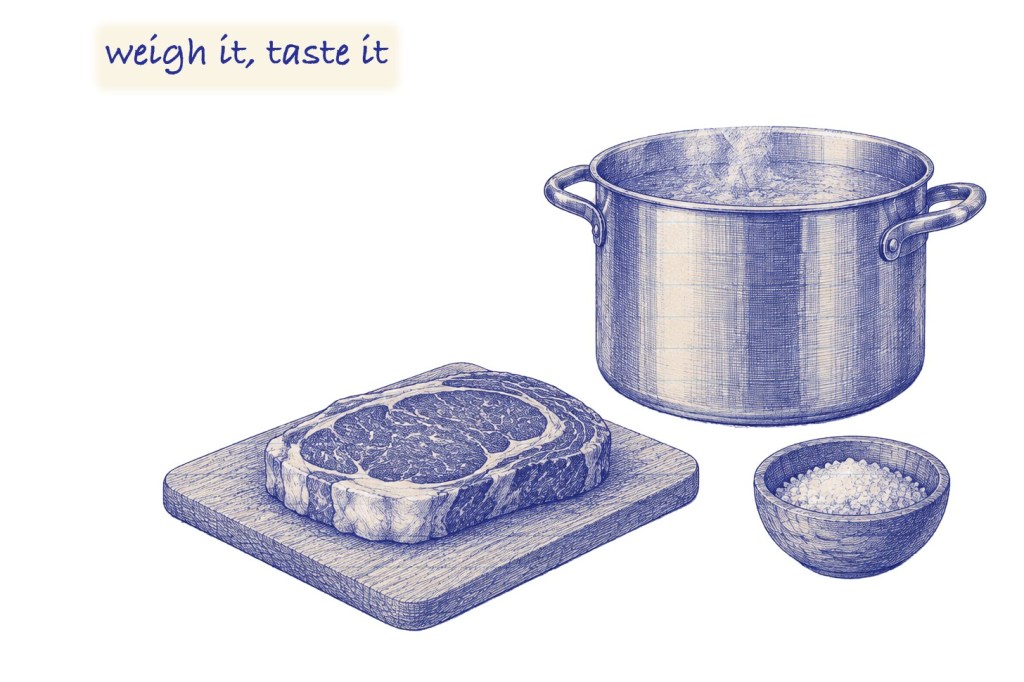
Salt is the one seasoning every cook uses and most cook with by feel. That works until the pasta is bland, the steak is gray and patchy, or the green beans taste of nothing. The fix is not a secret ingredient. It is knowing how much salt to use, and when to add it. Here is how I approach pasta water, steak and vegetables.
Start with a number: percent by weight
Professional cooks think in percentages, because a percentage works for any pot size. Salt as a share of the water’s weight is the easiest way to be repeatable. For cooking water, 1 percent is 10 grams of salt per liter. Many cooks go up to 2 percent for pasta. I suggest starting at 1 percent, tasting the water, and adjusting next time.
Why weigh? Because a spoonful of salt is not a fixed amount. Coarse flaky kosher salt and fine table salt can differ by a factor of two in weight for the same spoonful, and brands differ from each other too. A kitchen scale that reads in grams settles the question. Pick one salt for cooking and learn it.
Pasta water: salt it before the pasta goes in
Pasta absorbs water as it cooks, so the water is your one chance to season the pasta itself. Salt added to the sauce afterward only sits on the surface. Add the salt once the water is boiling or just before, stir to dissolve it, and taste the water. It should taste clearly salted, like a light broth, not like the sea.
Two practical points. First, the amount of salt belongs to the water, not the box, so use the same percentage whether you cook 200 grams of pasta or a pound. Second, if your sauce is already salty (anchovy, olives, capers, hard cheese, cured pork), stay at the lower end. A splash of the starchy pasta water in the sauce will bring more salt with it. Skip the oil in the water: it does not stop sticking. Plenty of water and a good stir in the first minute does.
Steak: salt early, or salt right before
Salt on raw meat first draws moisture to the surface and then, given time, that moisture dissolves the salt and is reabsorbed with it. This is why timing matters. The two approaches that work are:
- Salt well ahead. Season at least 40 minutes before cooking, and up to a day ahead on a rack in the refrigerator, uncovered. The surface dries out, which helps browning, and the seasoning reaches below the surface.
- Salt right before the pan. Season just as the steak goes into a hot pan or onto the grill. The surface is still dry, so it sears well.
The one to avoid is the middle: salting 5 or 10 minutes ahead, when the surface is wet with drawn-out moisture and has not yet been reabsorbed. A wet steak steams instead of searing. Pat the meat dry in either case. Season all sides, including the edges. A thick steak takes more salt than most people expect, because much of it stays on the surface.
Save a pinch of a finishing salt for after the steak is sliced. A little flaky or coarse salt on the cut face gives you bright salt crunch that cooking alone cannot. If you want to know more about the finishing salts, I wrote about them in my guide to French sea salt.
Vegetables: boil them in well-salted water
For green vegetables, such as green beans, broccoli or asparagus, the cooking water is again the seasoning. Use the same 1 to 2 percent, bring it to a rolling boil, and cook the vegetables uncovered until just tender. Then lift them out and either serve them or cool them quickly in ice water to hold the color. Unsalted water pulls flavor out of the vegetables, while seasoned water leaves them tasting like themselves.
For roasting, toss the vegetables with oil and a little salt before they go in the oven. Salt draws out water, so do not salt them long before roasting if you want them to brown; a few minutes is plenty. For sautéed vegetables, salt early in the pan for softer ones like onions and zucchini, since the moisture helps them soften, and later for mushrooms, which need dry heat to brown first.
Taste, then adjust
The most useful habit in a professional kitchen is tasting at every stage. Taste the pasta water. Taste a piece of pasta a minute before it is done. Taste the sauce before it meets the pasta. Salt in small steps, and wait for it to dissolve before you judge. You can always add more; you cannot take it out.
A short cheat sheet
- Pasta and boiled vegetables: 1 to 2 percent salt in the water (10 to 20 grams per liter), added before the food goes in.
- Steak: salt 40 minutes or more ahead, or right before cooking. Not in between.
- Roasted vegetables: salt just before the oven, with the oil.
- Always: weigh your salt once, so you learn what your spoon holds, and taste as you go.
None of this requires special equipment, just attention. Get the water right and the steak timed right, and the food starts tasting like itself, only better.

Leave a Reply