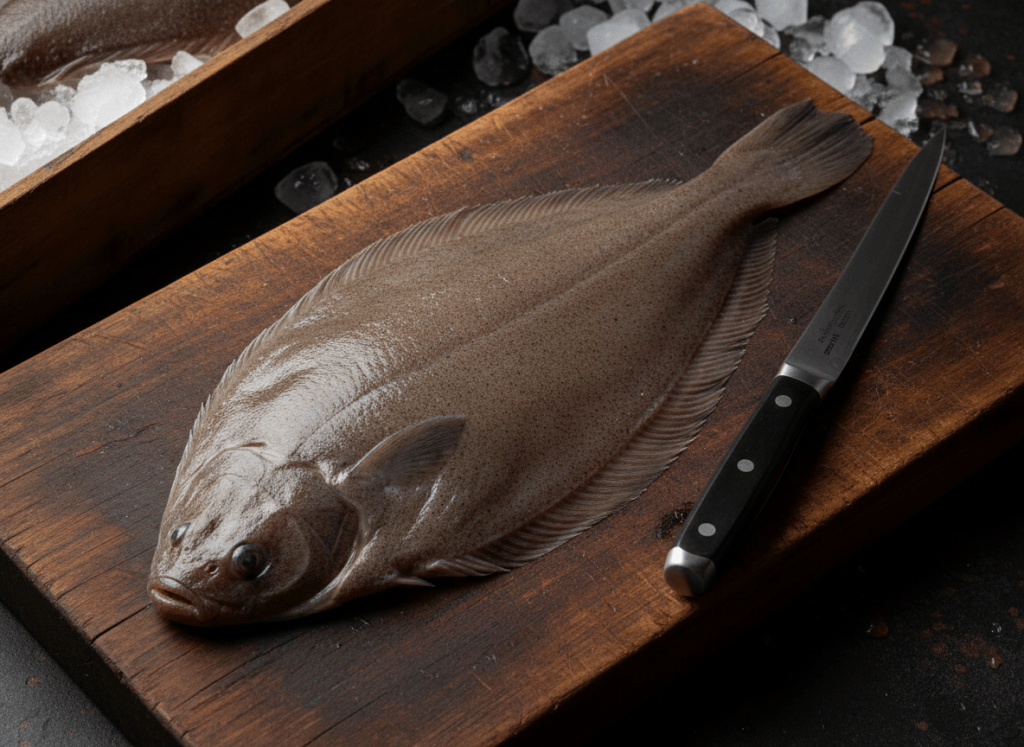
Alsace sits about as far from the ocean as you can get and still be in France, pressed against the German border, closer to the Rhine than to any tide. And yet every night during my apprenticeship, a truck arrived before dawn carrying wooden crates packed with crushed ice, and inside them: turbot, Dover sole, and whatever else the boats off the Atlantic coast had pulled up the day before. Caught, iced, trucked across half of France, and on our reception dock by 5 AM, under 24 hours from the sea to a kitchen that couldn’t see the sea from any window.
I was working under France’s alternance system, alternating weeks at cooking school with weeks actually working the line, at a restaurant in Mulhouse called Wir, named for the man who ran it: Raymond Wir. We just called him Chef. He was as much a mentor as a boss, and he’s the one who taught me to fillet a flatfish properly. And the knife I learned on was a Sabatier, one of a few my father bought to set me up before I ever started at the restaurant. That detail matters more to me now than it did then: my father, who wasn’t a cook, walking into a shop and buying his son the tools of a trade neither of us fully understood yet.
Before the Knife Touches the Fish
Here’s the part people skip when they talk about filleting sole: you don’t start with the knife. You start with the skin, and a Dover sole has two: a dark brown top skin and a white belly skin, and both have to come off clean before you fillet.
The trick, the one Chef Wir showed me, is almost violent in how simple it is: dip just the tip of the tail into hot water for a few seconds, then peel. The heat loosens the skin from the flesh right at that one point, and if you’ve done it right, the whole skin comes away from the tail toward the head in one continuous pull. It is intense, genuinely, physically intense, standing over a fish at 5 AM doing something that looks more like a magic trick than cooking. Get the timing wrong and the skin tears, or the flesh starts to cook. Get it right and it comes off like a glove.
Why This Knife, Specifically
Once both skins are off, the couteau filet de sole earns its name. A flatfish isn’t built like a round fish: you get four fillets instead of two, two off the top and two off the bottom, and every one of them depends on a blade thin and flexible enough to bend along the spine and stay pressed against it, stroke after stroke, without wandering into bone or tearing the flesh above it. A standard fillet knife is too stiff, too wide, made for a fish shaped like a torpedo, not a fish shaped like a dinner plate.
The blade flexes because that’s what lets it hug the spine on both the top and bottom passes. Professionals typically use blades in the 6 to 8 inch range, thinner and more flexible than a boning knife. The oldest trick in flatfish filleting: a single central incision down the spine first, so you can feel and hear the knife riding the bones on every stroke after. You’re not really looking anymore at that point, you’re listening and feeling.
What It Taught Me
I destroyed my share of sole learning this. Every torn fillet, every rushed skin pull, was a small failure in front of a chef who didn’t have time to be patient with a sixteen year old and a fish worth real money. But that’s exactly why the knife mattered. My father’s Sabatier wasn’t a gift I could take for granted. It was the tool I had to earn the right to use well, on fish that had traveled further to reach my station than I had ever traveled in my life.
Forty years and three continents later, I still think a couteau filet de sole is one of the most specialized, most underappreciated knives a serious home cook can own, right up there with what I’ve said about a proper chef’s knife or a santoku. It even earned its own line in my knife roll decades ago, and it has never once come out. You don’t need it often. But when you do, nothing else will do the job.
Chef Wir turned 90 in 2025, still remembered fondly by everyone who came up through that kitchen. I don’t know if a truck still pulls up to that dock in Mulhouse before dawn, but I know the standard he set never left me.
What to Buy
(Affiliate links below. I only recommend tools I’d keep on my own bench.)
- Sabatier Freres IDEAL Fillet Knife 8″: made in Thiers, France since 1885, by one of the original Sabatier makers. Fully forged from a single steel bar, round bolster, triple riveted handle, hand polished. As close to what my father bought me as anything sold today.
For keeping the edge right, see my full knife care guide and sharpening systems guide. A flexible fillet blade needs a gentler touch on the stone than a chef’s knife.
Couteau Filet de Sole FAQ
Can I use a regular fillet knife on sole or turbot?
You can, but you’ll lose flesh to the bone and fight the fish the whole time. The extra flex isn’t a luxury on flatfish, it’s the whole point.
Do I really need to remove both skins before filleting?
For clean, presentation ready fillets, yes. The technique above (hot water on the tail tip, then peel) works on both sides.
What if I don’t have a Sabatier?
Any thin, flexible 6 to 8 inch fillet knife will do the job. Sabatier is what I learned on and what I still reach for, not the only option.
Chef Jean, The Seasoned Bench
FTC disclosure: This post contains affiliate links. If you buy through them, I earn a small commission at no cost to you.

Leave a comment