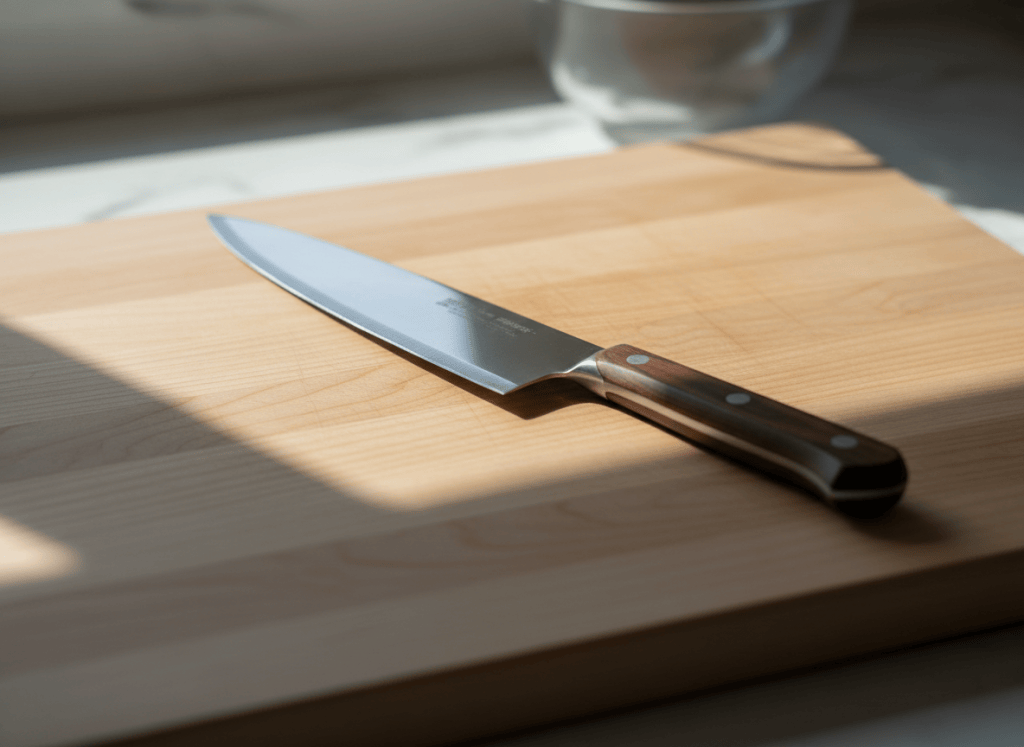
I’ve spent over four decades in professional kitchens — from a three-year apprenticeship in Alsace, France, through Michelin-starred kitchens in England and France, to running my own restaurants in San Francisco, Shanghai, Hong Kong, and Macau. In all that time, the single tool I’ve reached for more than any other, in every kitchen, on every continent, is a good chef’s knife.
If you’re only going to spend real money on one piece of kitchen gear, make it this one. A great chef’s knife makes every task faster, safer, and honestly more enjoyable — a dull, poorly balanced knife does the opposite, no matter how good your ingredients are.
I still remember the day my own training chef told me, at sixteen years old, to go buy a good knife before anything else. That advice hasn’t changed in the decades since. Here’s what I’d tell you if you asked me the same question today.
What to Look For
Before getting into specific picks, here’s what actually matters when you’re shopping for a chef’s knife:
Blade length. Most home cooks do best with an 8-inch blade — long enough to handle big produce and proteins, short enough to stay maneuverable. If you have a smaller kitchen or smaller hands, a 6-inch blade is worth considering.
Steel type. Stainless steel is low-maintenance and beginner-friendly — it resists rust and holds up fine for most home use. High-carbon steel takes a sharper edge and holds it longer, but it needs more care (dry it immediately after washing). Neither is “wrong” — it depends on how much maintenance you’re willing to do.
Weight and balance. Pick the knife up by the bolster (where blade meets handle) and let it rest in your hand. If it tips toward the blade, it’s blade-heavy — good for chopping through denser vegetables. If it tips back, it’s handle-heavy — better for precision work. Most home cooks do well with something close to neutral.
Handle material. Synthetic handles (POM, resin composites) resist moisture and are typically dishwasher-safe, though I’d still hand-wash any good knife. Wood handles look and feel beautiful but need more care and can warp if left wet.
Full tang vs. partial tang. Full tang means the steel runs the entire length of the handle, not just partway in. It’s more durable and better balanced — worth prioritizing on anything you plan to keep for years.
Top Picks by Category
Best Overall: Wusthof Classic 8″ Chef’s Knife
This is the knife that shows up on nearly every serious “best of” list for a reason. German-forged, full tang, well balanced, and durable enough to last decades with basic care. It’s the knife most professional kitchens I’ve worked in either used directly or measured themselves against.
Best Budget: Victorinox Swiss Army Fibrox Pro 8″ Chef’s Knife
If you want professional performance without the professional price tag, this is it. It’s the knife America’s Test Kitchen has repeatedly named their top pick, and it’s genuinely one of the best values in cutlery — full stop, not just “good for the price.”
Best Splurge / Professional-Grade: Shun Classic 8″ Western Cook’s Knife
Once you’ve used a great knife for long enough, you start to notice things a budget knife can’t give you — edge retention, how the blade moves through food, how it feels after two hours of prep. The Shun Classic delivers all of that, with a Damascus-clad blade that’s as beautiful as it is sharp.
Best for Small Hands: Wusthof Classic 8″ Hollow Edge Chef’s Knife
The hollow-ground edge on this one reduces sticking and drag, which makes it feel lighter and more controllable in a smaller grip — without sacrificing the durability of the standard Wusthof Classic line.
Best Japanese-Style Option: MAC MTH-80
A hybrid design — technically Japanese, but with a curve that Western-trained cooks will find familiar. High-carbon molybdenum steel, exceptionally light in the hand, and it takes an edge that most stainless Western knives simply can’t match. If you’re curious about Japanese-style knives but not ready to commit to a full traditional gyuto, this is the natural entry point.
How I Evaluated These
I don’t have a testing lab, and I don’t pretend to. What I do have is decades of daily use across professional kitchens, plus hands-on time with each of these knives at home. Here’s what I actually paid attention to:
- Edge retention after a week of regular use — does it still bite into a tomato cleanly, or has it started to drag?
- Balance during real prep work — not just holding it, but using it for twenty minutes straight on actual vegetables and proteins.
- Ease of sharpening — how forgiving the steel is if you’re maintaining it yourself with a home sharpening system, rather than sending it out.
FAQ
How much should I spend on a chef’s knife?
For most home cooks, $50–$150 gets you a genuinely excellent knife that will last for years with basic care. You can spend more, but you’re paying for refinement, not a meaningfully better cutting experience.
Carbon steel or stainless?
Stainless if you want low-maintenance and forgiving. High-carbon if you’re willing to dry it immediately after every use and don’t mind a bit more upkeep in exchange for a sharper, longer-lasting edge.
8-inch or 10-inch?
Stick with 8 inches unless you’re regularly breaking down large cuts of meat or prepping in serious volume. It’s the length that balances control and capability best for nearly everyone.
Looking to go deeper? Check out our guides on sharpening systems, Japanese vs. German knives, and how to care for your knives so they last. (Links coming soon as those posts go live.)
As an Amazon Associate, I earn from qualifying purchases.
 The Seasoned Bench
Leave a comment